
From grain to a good pint
Every pint
has a story.
Follow the fellow from our label through the familiar steps of making ale — from a handful of malt to that first country pub sip.
Take the first step ↓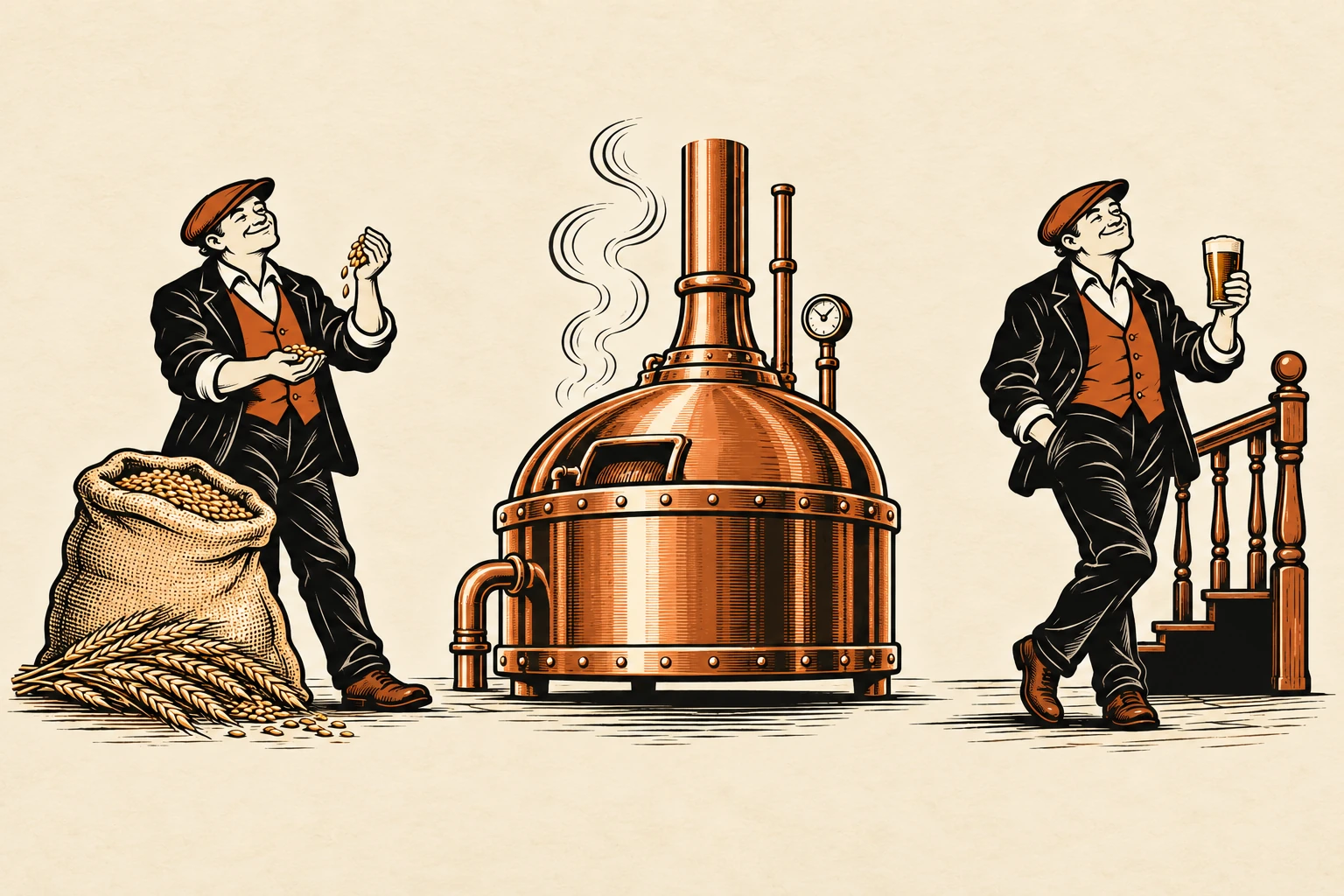
Chapter 01 · The first step
A good pint starts
with the grain.
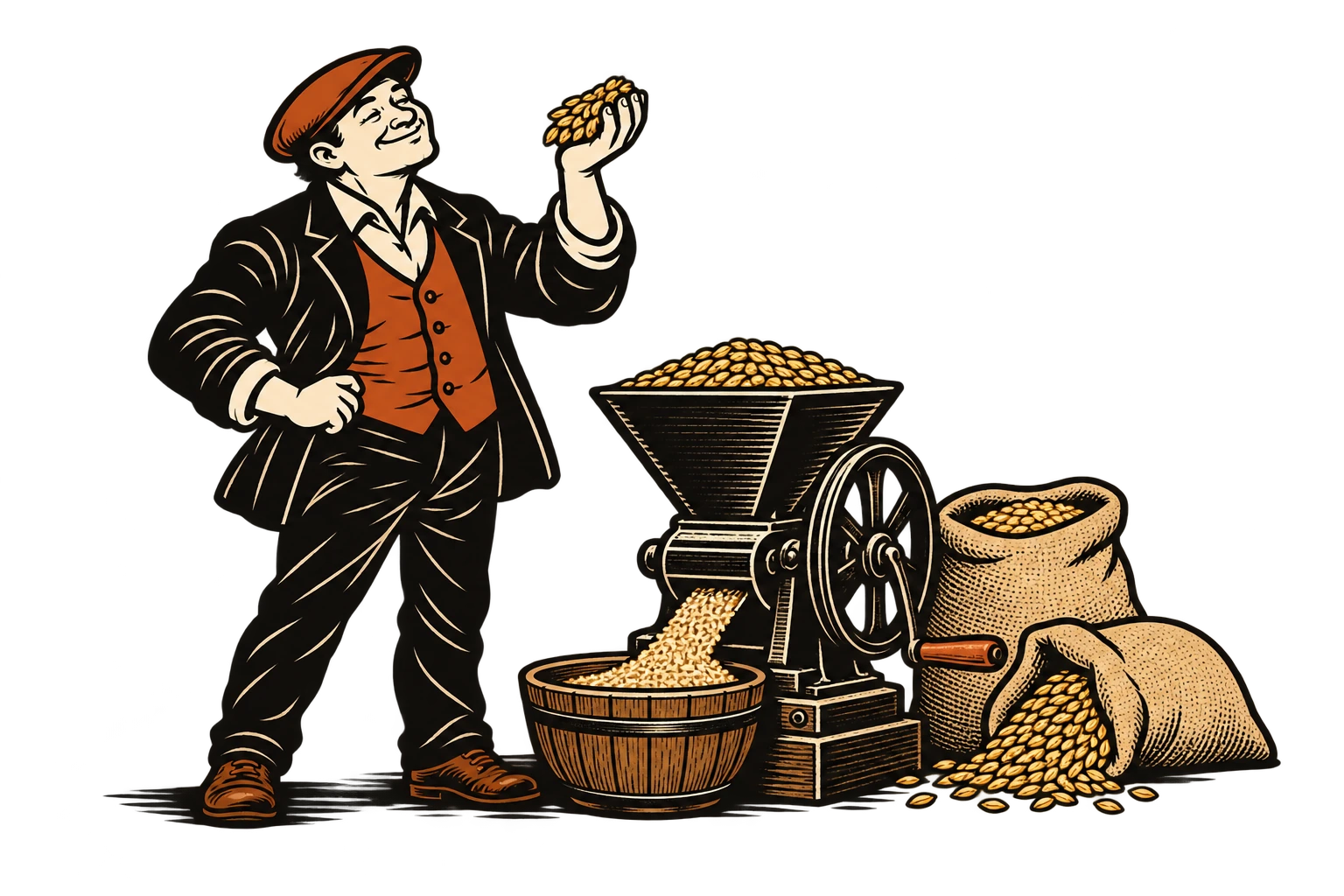
Our familiar fellow begins with a handful of malt. Before there is a foamy head or a first sip, there is the grain that gives beer its backbone — from pale, biscuity warmth to deeper toast and roast.
In the brewhouse
Malted grain is crushed to expose its contents. The choice of malts helps shape colour, flavour and the sugars available for fermentation.
Chapter 02 · A warm welcome
Water wakes
the sweetness.
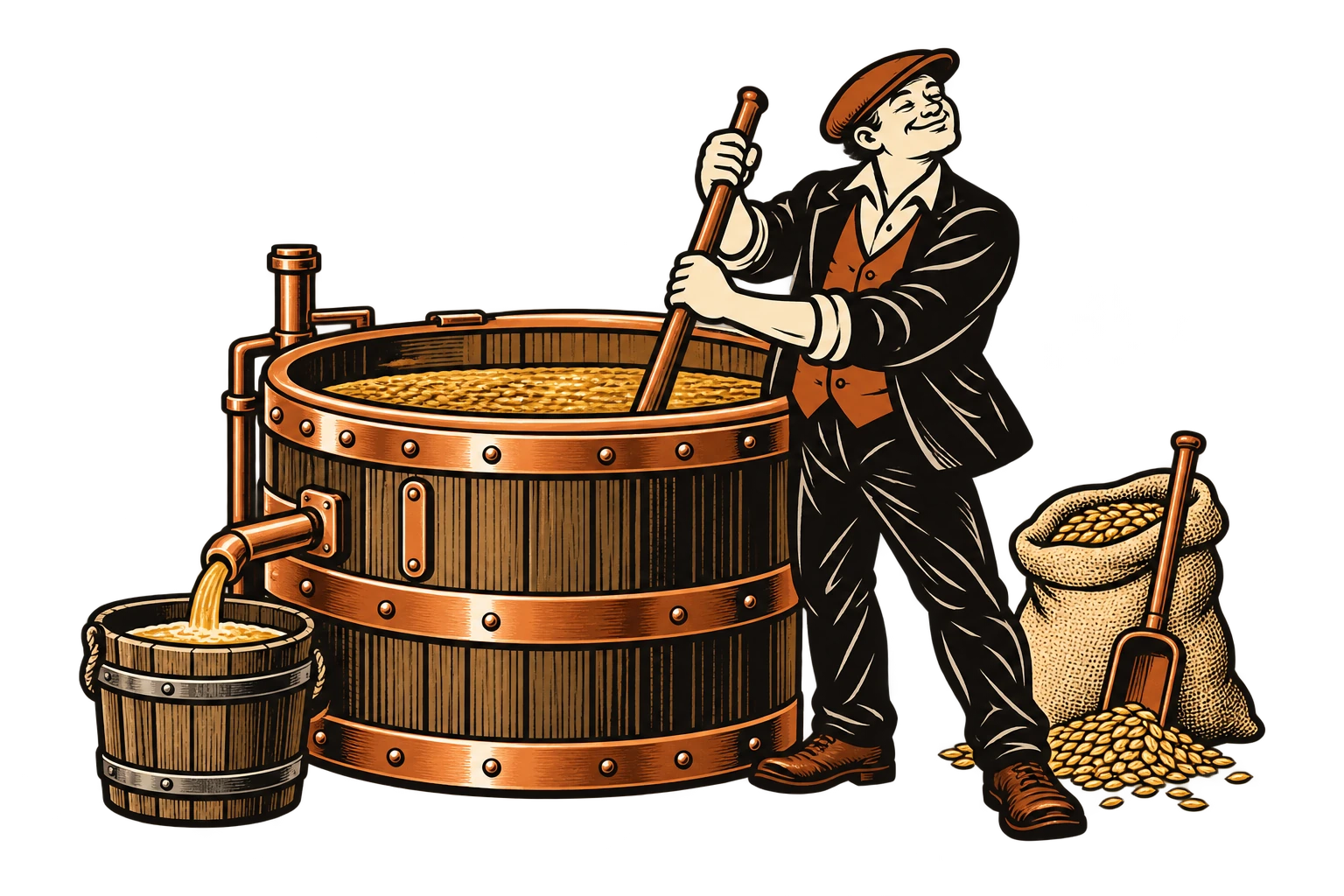
Into the mash tun goes the crushed grain, with warm water and a little time. Beneath the surface, starch becomes sugar. It is the beginning of the body and flavour that will carry through to the glass.
In the brewhouse
Enzymes convert starch into sugars during mashing. The sweet liquid — wort — is then separated from the grain, which may be rinsed to collect more of those sugars.
Chapter 03 · Character enters
A little bitterness.
A lot of character.
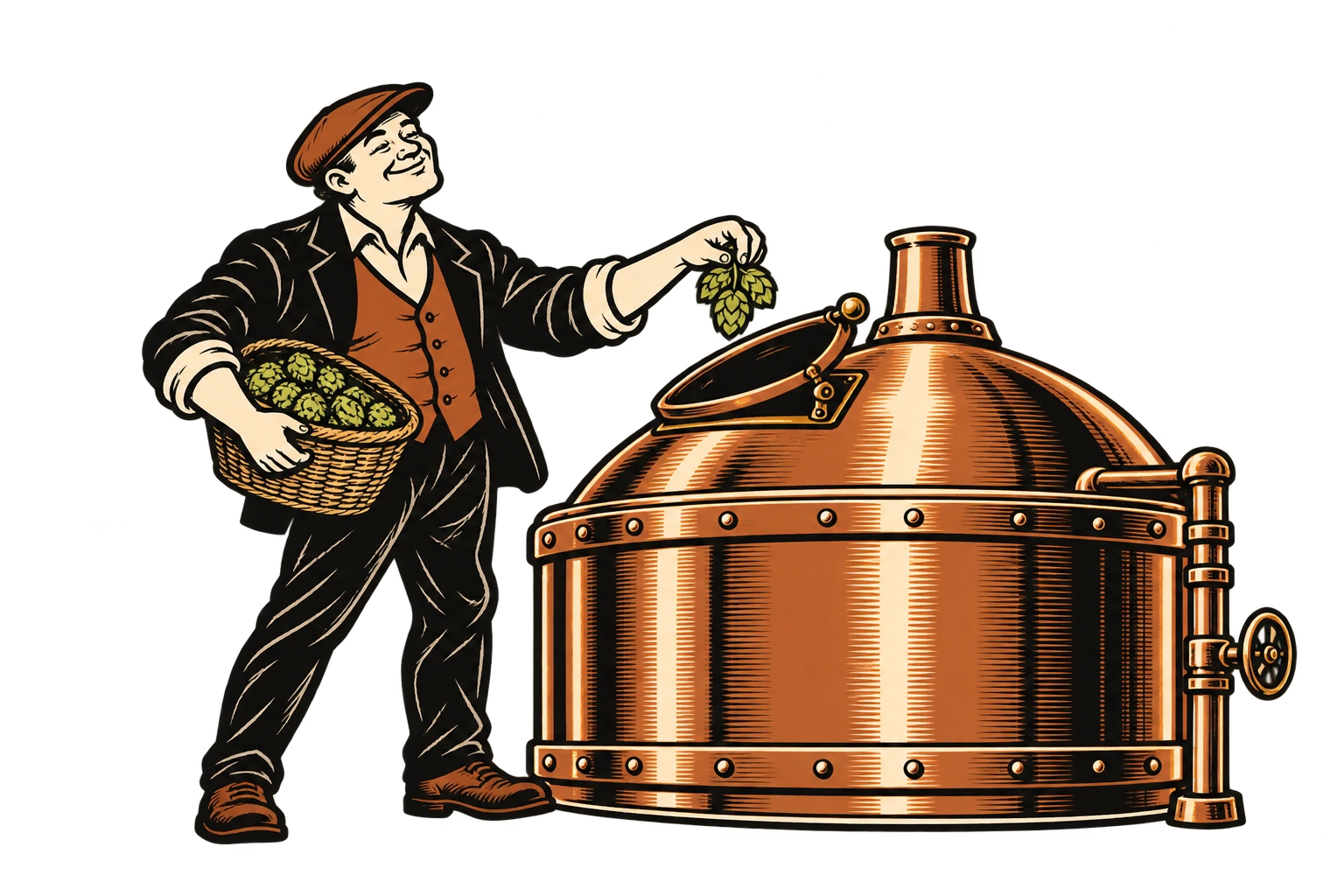
The sweet wort reaches the copper. Now the hops enter the story: a little floral lift, a brighter citrus note, or a firmer bitter edge. A few choices here can take a beer in a very different direction.
In the brewhouse
The wort is boiled with hop additions. Timing influences bitterness and aroma; some beers also receive hops after the boil or during fermentation.
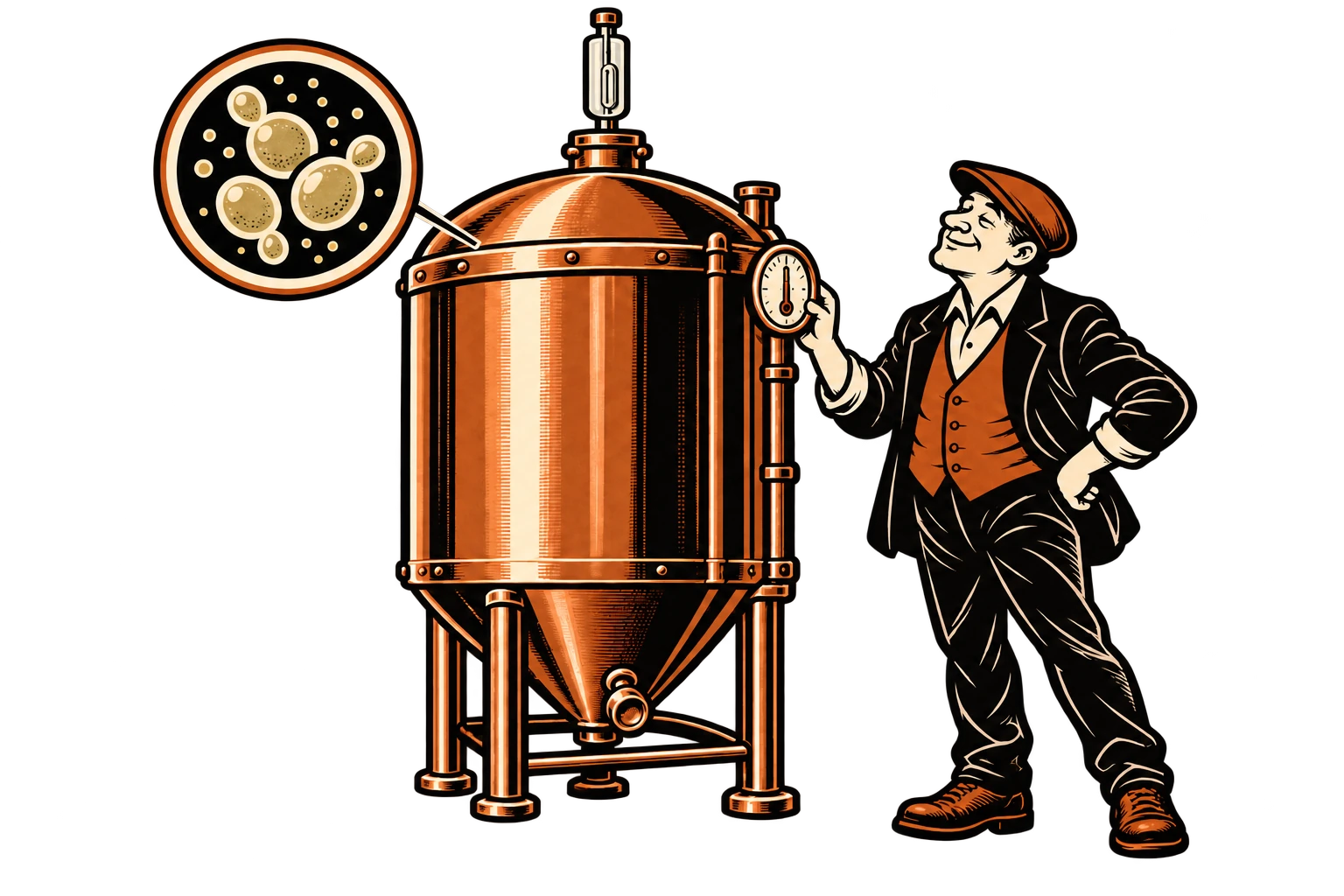
Chapter 04 · The quiet transformation
Small yeast.
A remarkable change.
The work becomes quieter once the wort has cooled. Yeast takes its turn, using the sugars gathered from the grain. The brewer keeps watch while the beer begins to find its own character.
In the brewhouse
After cooling, yeast is added. It converts fermentable sugars into alcohol and carbon dioxide, and contributes flavour. Temperature and yeast choice matter.
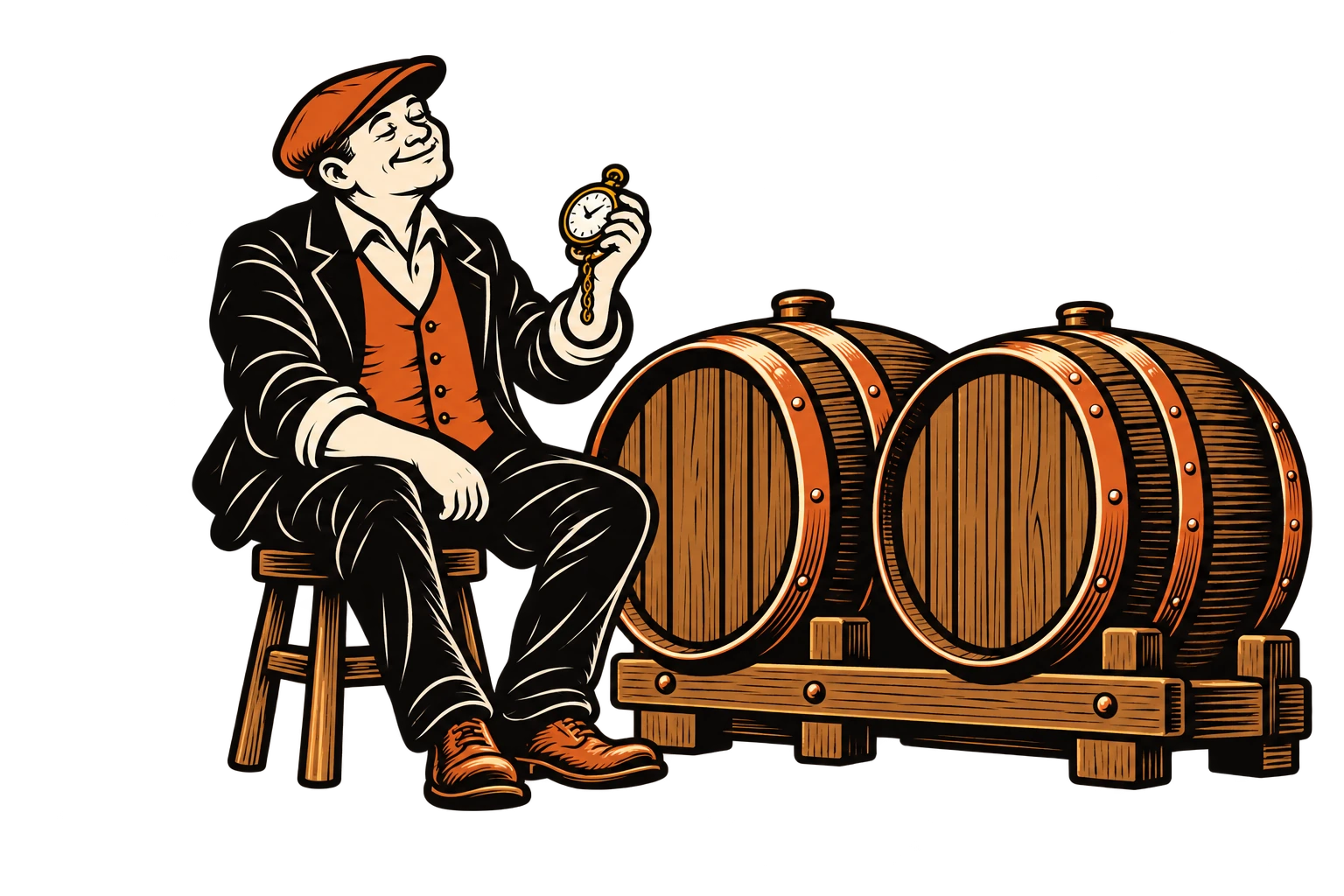
Chapter 05 · Good things take their time
Flavour finds
its footing.
Not every step needs a hurry. The beer is given time to mature, settle and come together. Our fellow checks his watch, then leaves the beer to the patience that a good pint deserves.
In the brewhouse
Conditioning allows beer to mature. Depending on the style and process, it may then be packaged into cask, keg, bottle or can; some beer continues conditioning in its package.
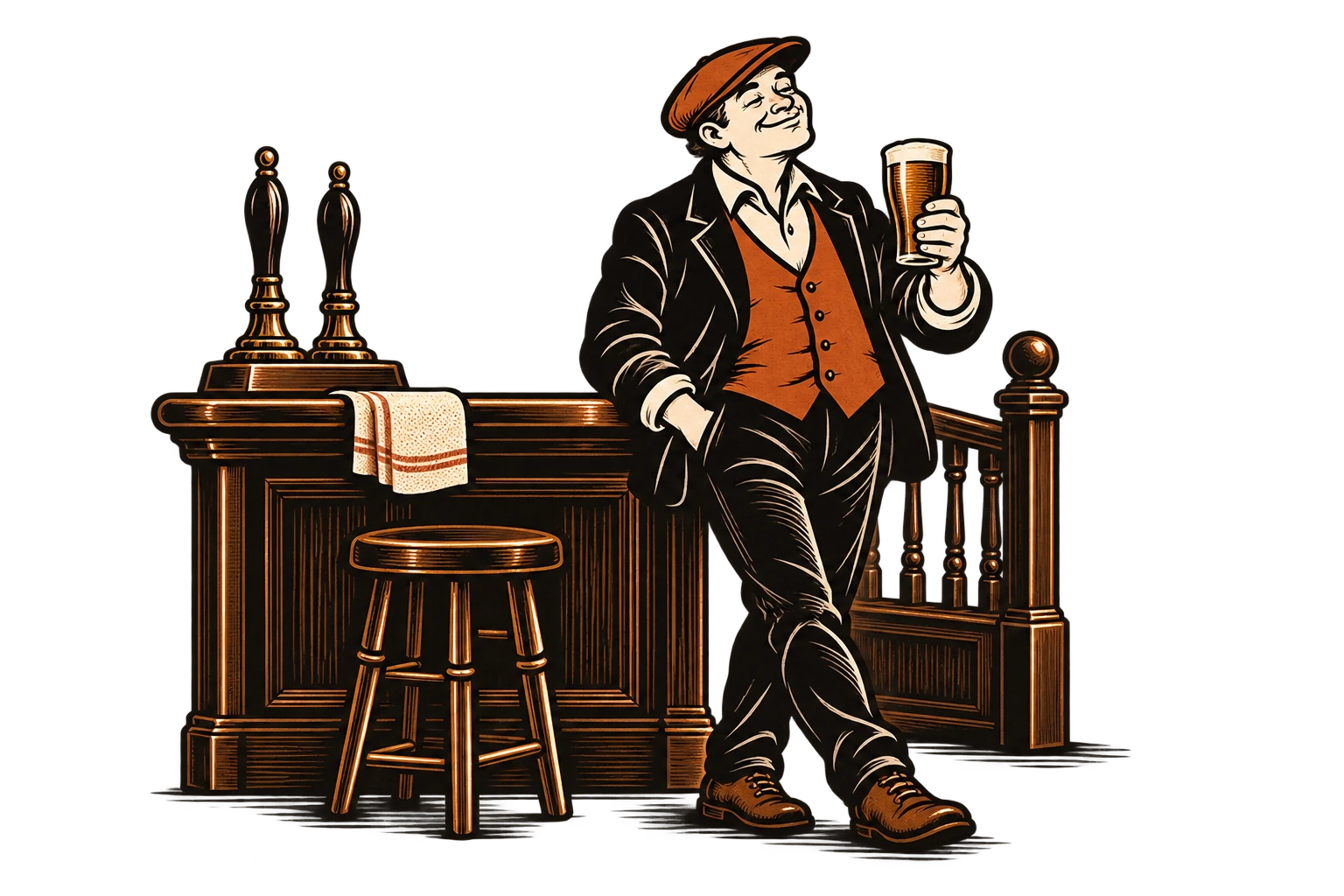
Chapter 06 · The country pub moment
And then,
that first sip.
Grain, water, hops, yeast and time have all played their part. The journey ends where the inspiration began: a country pub, a proper foamy head, and flavour worth taking a moment over.
In the brewhouse
Serving temperature, carbonation and dispense method affect aroma, texture and head. Different beer styles call for different choices at the bar.
English ale at heart
Eight beers.
Eight different characters.
Those familiar steps leave plenty of room for personality. Find the flavour that takes your fancy.
An illustrated guide to how ale is made. Processes vary between beers and breweries; these scenes are illustrative, rather than a depiction of Bannister premises.